
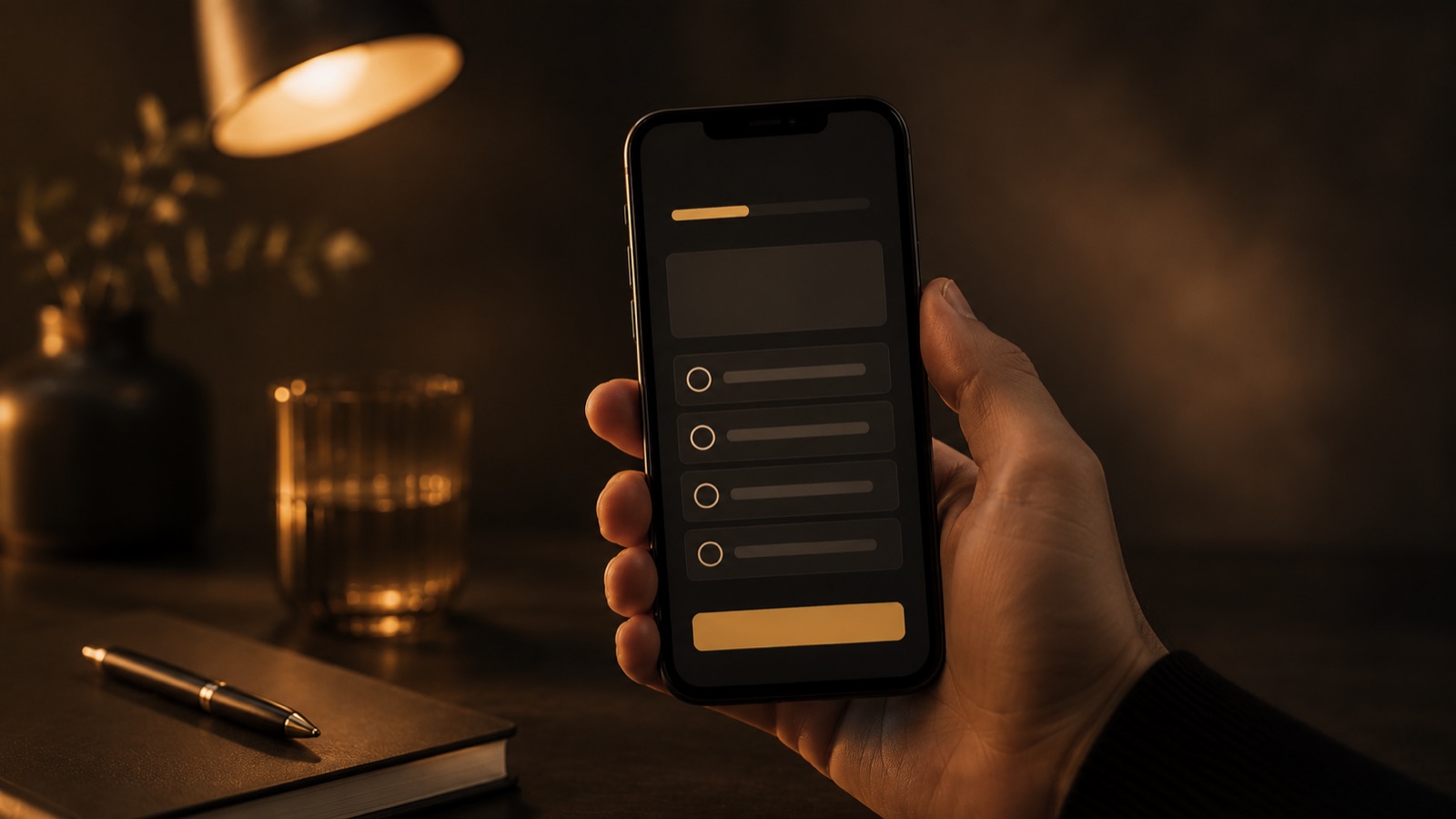
A plain opt-in box, the kind that says "give me your email for a PDF," converts okay. A short quiz converts better, often a lot better. That's because a quiz feels personal, people like answering questions about themselves, and you learn what each person needs so you can pitch the right thing instead of one generic email. Same traffic, more leads, and warmer ones. The trade is a little more setup, which is usually worth it the moment your audience has more than one kind of problem.
You're sending people to a landing page and you want their email so you can follow up and sell. The usual move is a box: name, email, "download my free guide." It works a bit. Some people fill it in, most don't, and you never really know who the ones who did actually were. So you blast the same email to all of them and hope.
There's a better way to ask, and it's a short quiz. Not a long survey, not a personality test for fun, just a handful of quick questions that feel like they're about them. People answer those way more often than they hand over an email to a cold box, and by the end you know enough to send them the exact thing they need. That's the whole edge.
Let me walk you through why it works, how a simple quiz is built, when to use one over a plain box, and the real numbers I've seen it pull.
Why a quiz beats a plain opt-in
Here's the short version: a plain box asks you to pay before you've seen anything, and a quiz gives you something before it asks.
Think about how the two feel. A plain opt-in puts the toll booth first. You land, and before you've gotten any value, it wants your email. Your guard goes up, because handing over your address feels like a small cost and you're not sure it's worth it yet. So a chunk of people bounce right there.
A quiz flips that. The first thing it does is ask about you. "What are you struggling with most right now?" "Where are you at, just starting or already running?" Those are easy to answer and kind of fun, because people like talking about themselves and their own situation. By the time the quiz asks for an email, you've already put in a few taps and you want to see your result, so giving the email feels like the last small step instead of the first scary one.
And there's a second win that's even bigger than the higher sign-up rate. You now know things about each person. You know what they said they're struggling with and where they're at, so the email you send next can speak to exactly that. A plain opt-in gives you an address and nothing else, which means everyone gets the same message. A quiz gives you an address plus a little map of who they are, so you can send the right offer to the right person, and that's what turns a lead into a buyer.
A plain box asks "what's your email." A quiz asks "what do you need," and then collects the email on the way out. People say yes to the second one far more often.
How a simple quiz funnel works
Don't picture anything complicated. A working quiz funnel is just four moving parts, and you can build a basic one in an afternoon.
Step 1, a promise on the cover
The quiz opens with a title that promises a useful result. Something like "Find out which type of funnel fits your business" or "What's leaking money in your funnel? Take the 60-second quiz." The promise is the hook, and it should sound like a quick answer to a problem the person already feels.
Step 2, a few quick questions
Then come the questions, and you want four to seven of them, no more. Each one does one of two jobs. Some questions sort people into buckets, like beginner or advanced, so you know who you're talking to. Other questions get them to admit the problem out loud, which warms them up to want the fix. Keep every question a single tap to answer so the whole thing flies by.

Step 3, the email gate right before the result
After the last question, the quiz says "here's your result, where should I send it?" That's where the email comes in, and because the person has already answered everything and wants to see what they got, most of them type it in. The email isn't the price of entry anymore, it's the doorway to a payoff they're already reaching for.
Step 4, a result that points somewhere
Last, the person gets their result, and the result isn't a dead end. It's tied to a next step that fits what they said. Beginners might get pointed to a starter guide, while people who said they're already running a business and bleeding leads might get pointed straight to a call. The result page is where the quiz quietly becomes a sales step, because it can recommend the exact thing that matches their answers.
That's it. A cover, a few questions, an email gate, and a result that sends them somewhere useful. Four parts.
The quiz funnel, in one breath
- A cover that promises a quick, useful result
- Four to seven one-tap questions about them
- The email gate right before the result, when they want it most
- A result that points each person to the next step that fits
When to use a quiz, and when a plain box is fine
A quiz isn't always the right call, so here's how to pick.
Use a plain opt-in when you sell one thing to one kind of person and you don't really need to know much about them. A simple newsletter sign-up or a single cheat sheet is a fine job for a plain box, because there's nothing to sort and one message fits everyone. Adding a quiz there would just be extra friction for no gain.
Use a quiz the moment two things are true. First, your audience has different problems or sits at different stages, so a beginner and a pro shouldn't get the same email. Second, you sell more than one thing, or one thing at different price points, so knowing who's who actually changes what you'd offer them. When both are true, a quiz pays for itself fast, because it sorts the crowd and lets you pitch each group the right thing.
Most founders and coaches I work with land squarely in quiz territory, because their audience is mixed and they've got more than one offer. If that's you, a quiz is almost always going to out-earn the plain box.
Does this actually work? Real numbers.
Theory is cheap, so here's what quizzes have pulled for real people I've run them for.
Jason O. Harris, a keynote speaker, had me build out his backend, and a quiz funnel was a big piece of it. That one quiz captured 3,473 leads, each one already sorted by what they told us in their answers, so the follow-up could speak to their actual situation instead of guessing.
Charlotte Hazelwood, a strength coach, had a quiz funnel sitting behind a big push of content, and when the traffic spiked it pulled 2,000 leads in two days. A plain box would have caught a fraction of that, because most of those people would have bounced at the email ask. The quiz got them answering first, so they stuck around to the end.
Same pattern both times. Ask about the person before you ask for their email, give them a result they want, and point that result at the right next step. The quiz does the sorting for you, which means warmer leads and less wasted follow-up.
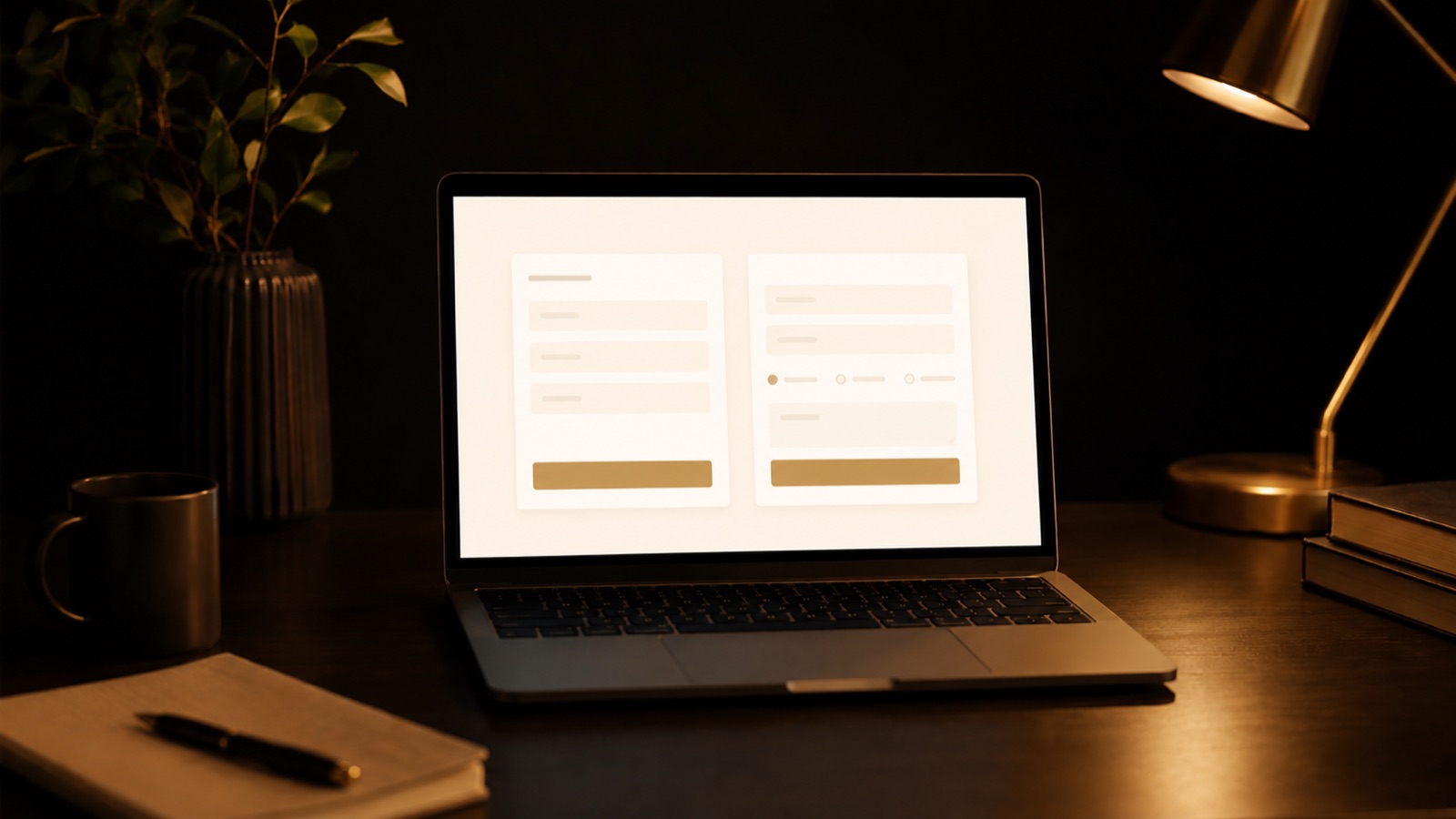
A few things people get wrong
A quiz is simple, but it's easy to drain its power with small mistakes. Watch for these:
- Too many questions. Past about seven, people quit halfway. Cut anything that isn't sorting them or warming them up.
- A boring cover. If the title doesn't promise a useful result, nobody starts. The cover is doing the same job a good hook does on a video.
- Asking for the email too early. Put the gate right before the result, not on question one, or you've just rebuilt the plain box you were trying to beat.
- A result that goes nowhere. If the result doesn't point to a next step that fits their answers, you collected data and wasted it. The result page is where the money is.
- Ignoring the answers afterward. The whole point is that you now know who's who, so use it. Send beginners one thing and ready buyers another. If everyone still gets the same email, you only got half the benefit.
Get those right and a quiz quietly beats a plain opt-in every week, on the same traffic, with warmer leads on the other side.
Want a quiz funnel built and run for you?
I build the whole thing, the quiz, the result logic, the follow-up emails and the backend that sorts every lead, so you just watch the right people come in. A few clients at a time, working with me directly.
Book a callCommon questions
Does a quiz funnel really beat a plain opt-in?
In most cases yes. A plain opt-in asks for an email up front, which feels like a toll booth. A quiz starts by asking about the person, which feels helpful, so more people start it and more people finish. You also learn what each lead needs, so you can send them the right thing instead of one generic email.
How many questions should a quiz funnel have?
Keep it short. Four to seven questions is the sweet spot. Each question should be quick to answer and feel like it's leading somewhere useful. If it drags on, people drop off, so cut anything that isn't helping you sort or help them.
When should I use a plain opt-in instead of a quiz?
Use a plain opt-in when you sell one thing to one kind of person and you don't need to know much about them, like a simple newsletter or a single cheat sheet. The moment your audience has different problems or you sell more than one thing, a quiz earns its keep.
Do I need a big audience for a quiz funnel to work?
No. A quiz lifts the percentage of visitors who turn into leads, so it helps at any size. With a big spike of traffic it can pull a flood, like 2,000 leads in two days, but even with steady traffic it quietly beats a plain box every week.