
Email still sells better than social because you own the list, so you can reach the same people again and again without paying for it or begging an algorithm. The way to sell without feeling gross is simple: sound like a real person, give something useful before you ask for anything, tell true stories, make one clear ask, and show up often enough that people remember you. Start every new subscriber with a short welcome sequence, and let AI draft the emails while your own voice keeps them human.
You've probably been told email is dead and social is where it's at. So you pour everything into posting, and you watch your reach drop the second the platform feels like it, and you realize you never actually got to keep any of those followers. They're not yours. They're rented. And the rent goes up whenever the platform wants.
Email is the one channel you actually own. When someone hands you their email, you can reach them tomorrow, next week, and next year without paying to be seen. No feed, no algorithm deciding if today's the day your people get to hear from you. That's why email still quietly out-sells social for almost every personal brand, even the big ones who pretend it's all about the content.
The catch is that most people write email like a robot or a used-car salesman, so it gets deleted or marked as spam. Let's fix that. Here's how to write email people actually open and like, and how to sell with it without ever feeling sleazy.
Why email beats social for selling
Three reasons, and they all come back to one idea: you own it.
You can reach them again. A post disappears in a day. An email sits in an inbox until someone reads it or trashes it, and you can send another one tomorrow to the same exact people. Social shows your stuff to a slice of your audience and hopes for the best. Email goes to everyone who said yes.
It feels personal. A post is shouted at a crowd, but an email lands in a private inbox next to messages from friends and family. If you write it like a note to one person, it reads like one, and that closeness is why email converts so much better than a feed.
It survives platform chaos. If a platform bans you, shadow-bans you, or just decides to bury your reach overnight, your list doesn't care. You export it, you keep emailing, and your business keeps running. That safety alone is worth building it.
The list is the one asset a platform can't take from you. Everything else you build on rented land.
Sound like a person, not a brand
Open your own inbox and look at what you actually read. It's almost never the polished, corporate-looking email with the giant header image and the buttons everywhere. It's the one that looks like a normal message from a normal human, because that's the one that feels like it's for you.
So write the way you talk. Short words, real sentences, the same voice you'd use texting a friend who happens to be smart. Skip the "Dear valued subscriber" stuff. Say hi like a person. If you'd never say a phrase out loud, don't put it in an email.
A quick test: read the email out loud before you send it. If it sounds like a press release, rewrite it until it sounds like you. People can feel the difference, and they reward the human one with their attention.
Give value before you ask for anything
Here's the rule that kills the sleazy feeling for good. Most of your emails should be worth reading even if the person never buys a thing. Teach something, share a story with a lesson in it, point out a mistake you see people make. Make the email a small gift, so by the time you do make an offer, you've already earned the right to ask.
Think of it like a friend who only ever texts you when they need money versus a friend who checks in, shares cool stuff, and helps you out, then once in a while asks for a favor. You say yes to the second friend every time. Your list works the same way.
This is also why you don't need to be pushy to sell. When you've given real value for weeks, the offer isn't an interruption, it's the natural next step for the people who want more of your help. Pressure is what people reach for when they haven't built any trust. You won't need it.
Tell stories, then make one clear ask
Facts tell, stories sell, and that's not a cliché, it's just how people are wired. A list of three benefits gets skimmed and forgotten, but a short story about a real client, a real mess, and how it got fixed sticks in someone's head. So most of your selling emails should open with a story and let the lesson do the work.
Then make one ask. Not five links to five things. One. Pick the single next step you want this email to drive, whether that's booking a call, grabbing a freebie, or buying the thing, and point everything at that one door. When you give people five choices, they pick none. When you give them one clear step, far more of them take it.
The shape is easy to copy: a real story up top, a useful lesson in the middle, and one clear ask at the bottom. Do that over and over and your emails will outperform almost anything fancy.
The welcome sequence every new subscriber should get
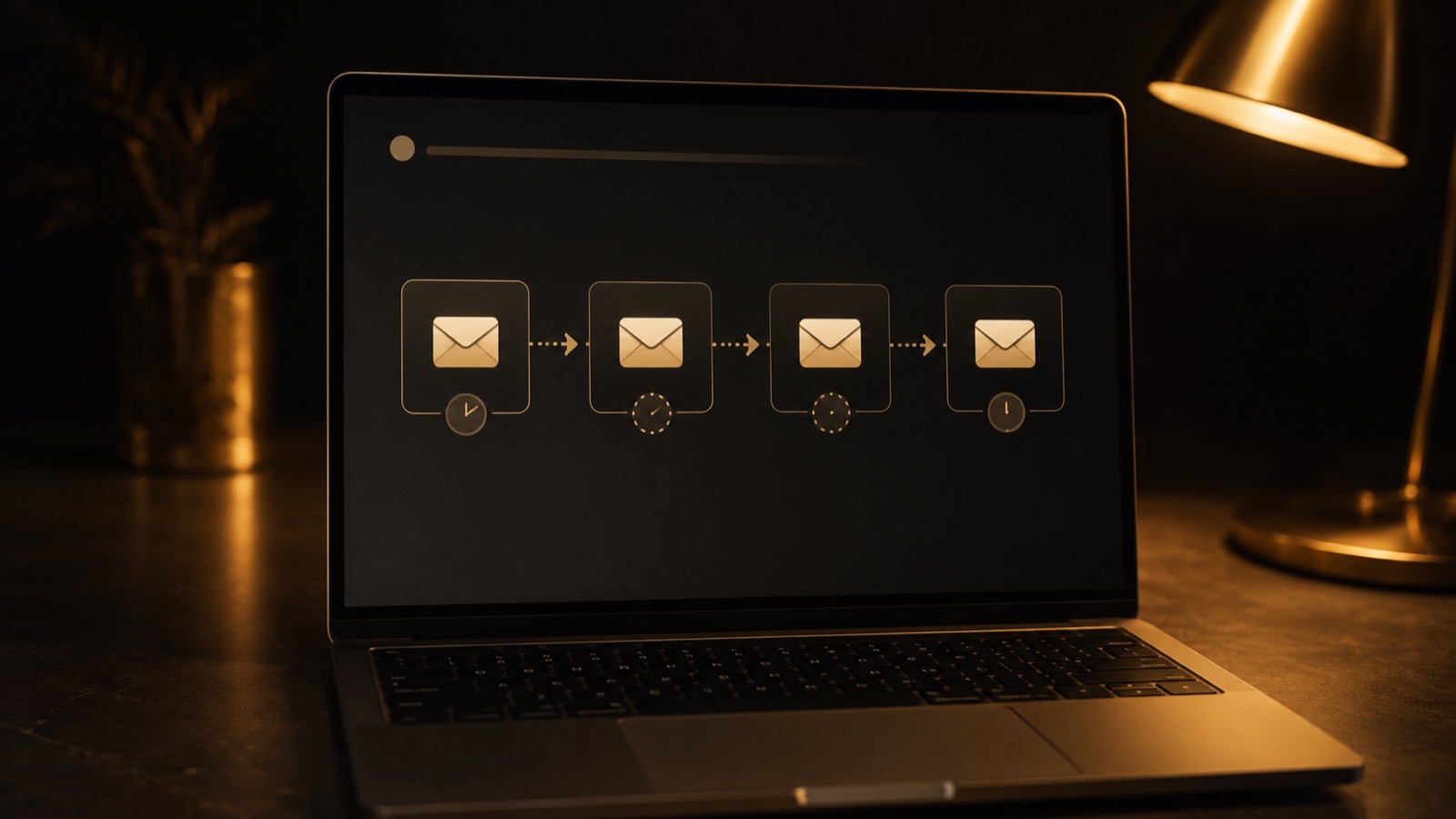
When someone joins your list, they're more interested in you right then than they'll ever be again, so don't waste that with silence. Set up a short welcome sequence that runs automatically the moment they sign up. Here's a simple five-email version you can build once and forget.
- Email 1, welcome and deliver. Sent right away. Say hi like a human, hand over whatever they signed up for, and tell them what to expect from you and how often. Set the tone here.
- Email 2, your story. A day later. Tell them who you are and why you do this in a quick, honest story. People follow people, so let them meet you.
- Email 3, a quick win. Teach one useful thing they can use today. This proves you're worth keeping around and trains them to open your emails.
- Email 4, proof it works. Share a real result or a short client story so they see this isn't just talk. Show, don't brag.
- Email 5, the soft ask. Now that you've given value four times, point them to the one next step that makes sense, a call, a product, whatever you sell.
That's it. Five emails, built one time, working for every new person who ever joins your list while you sleep. After the sequence ends, they roll into your regular weekly emails. This one setup does more selling than most people's entire social presence.
Send often enough to matter
The biggest mistake I see is going quiet. People build a list, get nervous about bugging anyone, and email once every two months. Then that rare email feels like a stranger knocking, and it gets ignored or unsubscribed. Showing up steady is how you stay welcome.
Once a week is a good place to start for most personal brands. It keeps you in their head without crowding them, and it gives you enough reps to actually get good at writing. If a few people unsubscribe when you email more, that's fine, those weren't your buyers anyway. The people who want your help are glad to hear from you.
And don't overthink every send. A short, useful, honest email beats a perfect one you never finish. Consistency wins. The brand people remember is the one that keeps showing up.
How AI fits without making it robotic
Writing a good email every week is real work, and that's exactly where AI earns its keep, as long as you use it right. The wrong way is to type "write me a sales email" and ship whatever comes out, because that text sounds like everybody else and your readers feel it instantly.
The right way is to feed AI your raw material, your story, your client's real numbers, the point you want to make, and let it shape a first draft fast. Then you go back in and put your voice on top, fix the parts that sound stiff, add the little real details only you know. AI handles the blank page and the structure, you handle the soul. You keep the speed and you keep sounding like you.
That's the same approach I use running email for clients, and it's the same idea behind building a personal brand with AI: the machine does the heavy lifting while your real voice stays out front, which is how one person can put out sharp, personal email every week without it eating their life.
Email that sells, in one breath
- You own the list, so email beats rented social reach
- Sound like a person and give value before you ask
- Tell a real story, then make one clear ask
- Set up a five-email welcome sequence once
- Send weekly, and let AI draft while your voice stays human
Does this actually work? Real numbers.
This isn't theory. Here's what good email and funnels did for real people I've run them for:
- Michelle "Mace" Curran, a fighter pilot turned author, hit USA Today Bestseller with a launch funnel and an email sequence built to carry the launch.
- Charlotte Hazelwood, a strength coach, ran a funnel that pulled 2,000 leads in two days, every one of them an email address she now owns.
- Jason O. Harris, a keynote speaker, got his full backend handled and a funnel that captured 3,473 leads for his list.
Same idea every time: give value, build the list, write like a human, and make one clear ask. The list is the asset that keeps paying off long after a post is gone.
Want your email run for you instead of by you?
I build and run the whole machine, the content, the funnel, the email and the backend, so all you do is record two videos a week. A few clients at a time, working with me directly.
Book a callCommon questions
Is email marketing still worth it for a personal brand?
Yes, more than ever. Social platforms can change the rules or hide your posts any day, but your email list is yours. You can reach the same people again and again without paying for it or hoping an algorithm lets you through. That's why email still sells better than social for most personal brands.
How often should I email my list?
Often enough that people remember who you are, so once a week is a safe place to start. If you go quiet for a month, your next email feels like a stranger showing up to ask for money. Show up steady, give value most of the time, and people stay happy to hear from you.
How do I sell in an email without sounding pushy?
Give value first so the email is worth reading even if nobody buys, then make one clear ask at the end. Tell a real story, share something useful, and point to one next step. You don't need pressure or fake countdowns. People buy from someone they trust, and trust comes from being helpful over and over.
Can AI write my emails for me?
AI can draft fast and save you hours, but raw AI emails sound generic and people feel it. The trick is to let AI build the first draft from your notes and stories, then put your own voice and real details back in. The mix is what keeps it human while still being quick.