

To grow on YouTube as a founder or coach, pick one clear topic you want to be known for, post one solid long-form video a week, and treat shorts as the feeder that gets new people in the door. Your hook, title and thumbnail are what earn the click, so spend real time there. Then point every video at one next step, a free thing or a call, so views turn into leads. Early on, watch time and click-through matter, subscriber count barely does, so don't chase the vanity numbers.
You built something good, and you can talk about your work for hours, but the people who should be hiring you have no idea you exist. Meanwhile someone with half your skill keeps showing up on YouTube and somehow they're the one getting the calls. That gap isn't about talent. It's about being findable, and YouTube is the best place to fix that for the long haul.
Most founders dabble with a few platforms, post for a couple of weeks, see nothing, and quit. The reason it didn't work is almost never the content. It's that they treated YouTube like Instagram, chasing quick hits, when YouTube actually rewards patience and a clear topic. So let's walk through how to grow on YouTube as a founder the right way, what to do every week, and what to ignore.
Why YouTube is the best long-term platform for a founder
Short answer first: because YouTube is the only big platform where the work you do today keeps paying you for years.
Three things make it different from the rest, and all three help a founder or coach.
It runs on search. A YouTube video is more like a blog post than a story. Someone types "how do I fix X" two years from now, finds your video from today, and books a call. Instagram and TikTok posts mostly die within a day or two, so you're always feeding the machine. On YouTube your old videos keep working while you sleep, which means your library compounds instead of resetting.
It builds real trust. People watch you for eight or ten minutes, they hear how you think, they see your face and your stories, and by the time they reach out they already feel like they know you. That's a warm lead before you've spoken a word to them. For anyone selling a high-ticket service or coaching, that trust is the whole game.
It has a long shelf life. A good video can sit there for years and still bring in a steady trickle of the right people. You're building an asset, not renting attention. So while the other platforms are sprints you have to keep running, YouTube is more like planting something that grows.
The short version: search plus trust plus long shelf life means one YouTube video can work for years, while a post on the fast platforms is mostly done in a day.
Pick one topic and stick to it
This is the part most people skip, and it's the part that decides everything.
YouTube needs to know who to show your video to, and it figures that out from your topic. If your channel is a coach talking about business one week, travel the next, and gym tips after that, the algorithm gets confused and shows your stuff to nobody in particular. So pick one lane that matches what you sell and stay in it for a long time.
Think about the person you want to reach and the one problem you solve for them, then make that your whole channel. You can have range inside the lane, different angles, different questions, but the through-line stays the same. When someone lands on your channel they should get what you're about in five seconds. That clarity is what makes the algorithm trust you with new viewers.
Post consistently, which beats posting a lot
One good long-form video a week is enough to grow. What kills almost everyone isn't posting too little, it's posting hard for two weeks and then vanishing.
YouTube rewards the channel that keeps showing up, partly because consistency trains the algorithm and partly because it gives you enough at-bats to learn what works. The founder who posts once a week for a year will crush the one who posts daily for a month and burns out. So pick a pace you can actually keep when you're busy and stressed, and protect it.
This is also where having help matters. Recording is the only part that has to be you, and that's small. The editing, the thumbnails, the titles, the clips, all of that can be handled around you so the weekly video keeps going even in a rough week. That's the difference between a channel that grows and one that stalls.
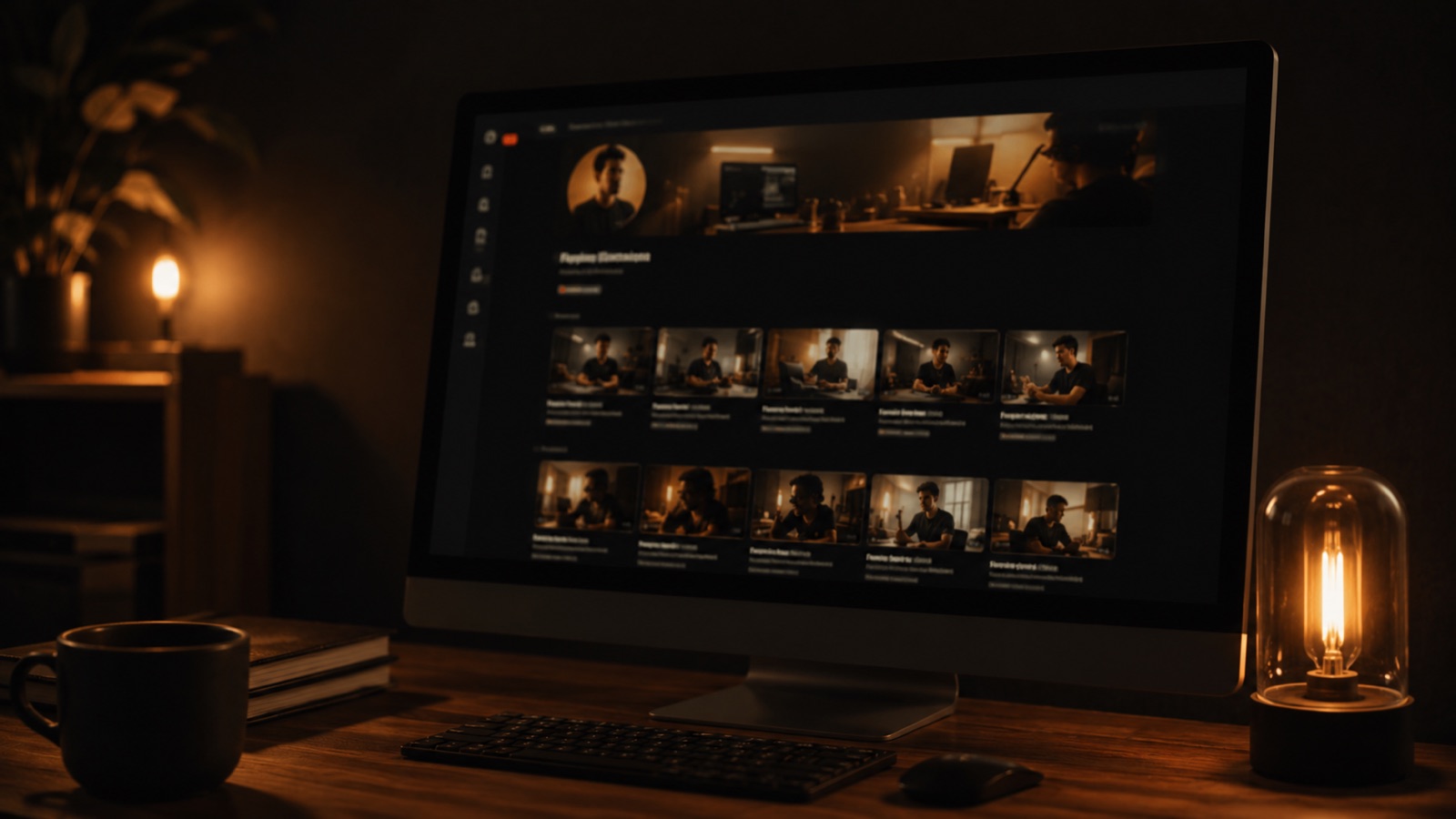
Hooks, titles and thumbnails that earn the click
Here's a hard truth: the best video in the world gets zero views if nobody clicks it. So the title, the thumbnail and the first few seconds are where a big chunk of your effort should go.
The title should make a promise the viewer wants. Be clear over clever. Say exactly what they'll get or learn, in plain words they'd actually type or think. "How I got my first 10 clients with no audience" beats anything vague and arty.
The thumbnail is the storefront. It should be simple, readable on a tiny phone screen, and it should make someone curious in a single glance. One clear idea, a face with real emotion if it fits, a few big words at most. Busy thumbnails get scrolled past.
The hook is your first fifteen seconds. Open with the payoff or the tension, not a long intro. Don't make people wait through "hey guys, welcome back, smash that like." Get to the good part fast so they decide to stay, because YouTube watches whether they stay and shows your video to more people when they do.
Title, thumbnail and hook are the three levers that move new channels the most. Spend more time there than you think you should.
Use shorts as the discovery feeder for your long videos
Shorts and long-form do two different jobs, and the smart play is to use them together.
Shorts are the discovery engine. They get pushed to people who've never heard of you, so they're great for getting in front of a crowd fast. But a short by itself doesn't build much trust, and it won't sell your service. So a short is the front door.
Long-form is where the trust and the leads actually happen. So you use shorts to pull strangers in, and a slice of them click through to your longer videos where they really get to know you. The flow is simple: shorts bring the crowd, long-form turns them into fans, your funnel turns fans into leads. Pull short clips straight out of your weekly long video and you get the feeder for free.
Point every video at one next step
Views feel nice, but views don't pay you. The bridge from watching to working with you is one clear next step in every single video.
Pick one thing you want viewers to do, a free guide, a quiz, a newsletter, a call, and ask for it the same way every time, in the video and in the description. Don't give five options, that just freezes people. One offer, repeated, builds a path that turns a casual viewer into a lead while you sleep.
This is the piece most founders forget, and it's why some channels with big numbers make no money while smaller channels print leads. The content gets attention, the next step turns attention into business.
The weekly YouTube loop, in one breath
- One topic, one promise, every single video
- One solid long-form video a week, no matter what
- Pour effort into title, thumbnail and the first fifteen seconds
- Cut shorts from the long video to feed new viewers in
- Send everyone to one clear next step
What actually matters early vs the vanity stuff
When you're starting, the numbers people brag about are the wrong ones to watch. Here's what to track instead.
Click-through rate tells you if your title and thumbnail are working. If people see your video and don't click, fix the packaging before anything else.
Watch time and retention tell you if the video itself holds up. If folks click but drop off in twenty seconds, your hook or your pacing needs work.
Those two numbers are what YouTube uses to decide whether to show your video to more people, so they're the ones that move you. Subscriber count, likes and total view count feel good but they don't drive growth early on, and chasing them pulls you toward cheap content that doesn't sell. Watch the real numbers, ignore the applause, and you'll grow on the things that actually matter.

Does this actually work? Real numbers.
It's easy to talk theory, so here's what this exact playbook did for a real person I ran it for.
Charlotte Hazelwood, a strength coach, started from zero on YouTube. We picked one clear topic, posted consistently, sweated the titles and thumbnails, and used shorts to feed the long videos. She went from 0 to 30,000 subscribers, the content engine behind her crossed 18 million views and 530,000 followers, and one funnel attached to all that pulled 2,000 leads in two days. Same loop you just read, run with patience.
And it's not a one-off. Michelle "Mace" Curran, a fighter pilot turned author, used the same kind of system to hit USA Today bestseller with content that crossed 5 million views, and Jason O. Harris, a keynote speaker, got his backend built around a funnel that captured 3,473 leads. Different people, same idea: a real person on camera, one clear topic, a machine running around them, and one next step to capture the lead.
Want your YouTube run for you instead of by you?
I build and run the whole machine, the videos, the shorts, the titles, the funnel and the backend, so all you do is record. A few clients at a time, working with me directly.
Book a callCommon questions
Why YouTube instead of Instagram or TikTok for a founder?
YouTube is built around search, so a video you post today keeps pulling in viewers for years. People also watch longer there, which builds real trust before someone ever books a call. Instagram and TikTok are great for getting seen, but the posts die fast. YouTube is the one platform where your work keeps paying you back.
How often should a founder post on YouTube?
One solid long-form video a week is plenty to grow, and a few shorts on top help people find you. The thing that matters most is staying consistent for months, not posting a lot for two weeks and quitting. Steady beats heavy every time.
What actually matters early on YouTube?
Hooks, titles and thumbnails that earn the click, plus picking one clear topic so the algorithm knows who to show you to. Subscriber count and likes barely matter at the start. Watch time and click-through rate are the numbers that move you.
Do shorts actually help you grow on YouTube?
Yes, when you use them as a feeder. Shorts get you discovered by people who've never heard of you, and a slice of them click through to your long videos where the trust gets built. Shorts bring the crowd, long-form turns them into fans and leads.